
Close Menu
    Facebook X (Twitter) Instagram
    SciTechDaily
    • Biology
    • Chemistry
    • Earth
    • Health
    • Physics
    • Science
    • Space
    • Technology
    Facebook X (Twitter) Pinterest YouTube RSS
    SciTechDaily
    Home»Earth»Asia’s Elephant Crisis: A Staggering 64% Habitat Loss in Three Centuries
    Earth

    Asia’s Elephant Crisis: A Staggering 64% Habitat Loss in Three Centuries

    By Scientific ReportsMay 6, 2023No Comments4 Mins Read
    Facebook Twitter Pinterest Telegram LinkedIn WhatsApp Email Reddit
    Share
    Facebook Twitter LinkedIn Pinterest Telegram Email Reddit
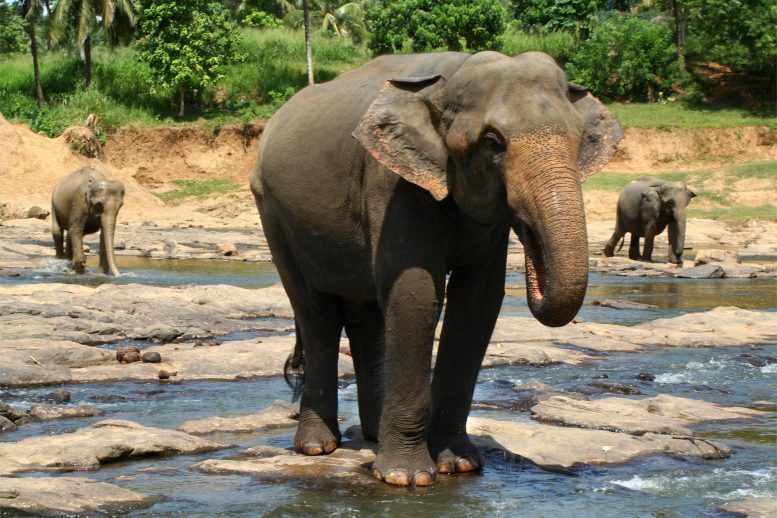
    Asian Elephants Cross Stream
    A study published in Scientific Reports reveals that suitable habitats for Asian elephants across Asia have reduced by over 64%, equivalent to 3.3 million square kilometers, since 1700. This coincides with colonial-era land usage and increased agricultural activities. The research, led by Shermin de Silva, evaluated changes in Asian elephant ecosystems in 13 countries from 850 to 2015. The study found that while in 1700, 100% of the area within 100km of the current elephant range could have been considered suitable habitat, by 2015, less than half (48.6%) was deemed suitable. Countries such as China and India have lost around 94% and 86% of suitable elephant habitat, respectively.

    Asian elephant habitats across Asia have decreased by over 64% since 1700, equating to a loss of 3.3 million square kilometers. Researchers found that by 2015, less than half of the area within 100km of the current elephant range was deemed suitable, with countries like China and India seeing drastic habitat losses. The findings highlight the need for sustainable land use and conservation strategies.

    Habitats suitable for Asian elephants (Elephas maximus) across Asia have decreased by over 64% – equating to 3.3 million square kilometers (1.3 million square miles) of land – since the year 1700, estimates a study published in Scientific Reports. The authors suggest that habitat loss from 1700, after centuries of relative stability, coincides with the colonial-era use of land and subsequent agricultural intensification in South Asia.

    Asian elephants live in a range of habitats including grasslands and rainforests, but with increasing human use of land and habitat loss, elephants can come into conflict with humans. To assess the historical distribution of elephant habitats and land-use change, data on elephants and environmental factors can be modeled to infer habitat suitability across an area and over time.


    Animation tracking the loss of suitable habitat for Asian elephants (yellow) between 1700-2015. A study published in Scientific Reports led by UC San Diego examining habitats across centuries reveals an urgent need for sustainable land-use and conservation strategies to avoid dangers for wildlife and human communities. Credit: Ashley Weaver

    Shermin de Silva and colleagues estimated the change in the spread and fragmentation of Asian elephant ecosystems in 13 countries between the years 850 and 2015 and calculated the change in suitable habitat from 1700 to 2015. Habitats were categorized as suitable if they exceeded a threshold defined and modeled according to ecological criteria including the percent of primary forests and pastures, non-forested vegetation, cropping and irrigation patterns, wood harvest rates and urbanization, amongst other factors.

    The authors compared an area within 100km of the current range of elephants in Asia and found that in 1700, 100% of the area could have been considered suitable habitat but by 2015 less than half was considered suitable (48.6%). They suggest that mainland China, India, Bangladesh, Thailand, Vietnam, and Sumatra have each lost more than half of their suitable elephant habitat range, with the greatest declines in China (around 94% of suitable habitat lost) and India (around 86% of suitable habitat lost). Estimates of land in Borneo suggest it has gained habitat that is suitable for elephants. The authors suggest that the decrease in suitable habitat for Asian elephants may drive potential conflict between elephants and people.

    The authors conclude that it is important to consider the history of the landscape to understand the distribution of elephants in Asia and to help develop more sustainable land-use and conservation strategies to meet the needs of both elephants and people.

    For more on this research, see The Alarming Decline of Elephant Ecosystems.

    Reference: “Land‑use change is associated with multi‑century loss of elephant ecosystems in Asia” 27 April 2023, Scientific Reports.
    DOI: 10.1038/s41598-023-30650-8

    Never miss a breakthrough: Join the SciTechDaily newsletter.
    Follow us on Google and Google News.

    Conservation Ecology Elephants Endangered Scientific Reports
    Share. Facebook Twitter Pinterest LinkedIn Email Reddit

    Related Articles

    Giants on the Move: High-Tech Tracking of Namibia’s Majestic Elephants

    Tall Order: The Fight to Save the Masai Giraffes From Extinction

    The Alarming Decline of Elephant Ecosystems in Asia

    Hidden Costs of Conservation Take Bite Out of Benefits

    Nature Documentaries Don’t Show Threats to Nature, but Increasingly Talk About Them

    Cloud Forest Trees Depend on Fog

    Data Shows 2010 Amazon Megadrought Caused Serious Devastation

    Deforestation Adds More Atmospheric CO2 Than the Sum Total of Cars & Trucks on the World’s Roads

    Survey of Brazil’s Atlantic Forests Reveals Loss of Key Species

    Leave A Reply Cancel Reply

    • Facebook
    • Twitter
    • Pinterest
    • YouTube

    Don't Miss a Discovery

    Subscribe for the Latest in Science & Tech!

    Trending News

    5 Simple Ways To Remember More and Forget Less

    The Atomic Gap That Could Cost the Semiconductor Industry Billions

    Researchers Finally Solve 50-Year-Old Blood Group Mystery

    Scientists Discover “Molecular Switch” That Fuels Alzheimer’s Brain Inflammation

    Trees Emit Tiny Lightning Flashes During Storms and Scientists Finally Prove It

    Pomegranate Compound Could Help Protect Against Heart Disease

    Your Blood Test Might Already Show Alzheimer’s Risk

    Scientists Were Wrong About This Strange “Rule-Breaking” Particle

    Follow SciTechDaily
    • Facebook
    • Twitter
    • YouTube
    • Pinterest
    • Newsletter
    • RSS
    SciTech News
    • Biology News
    • Chemistry News
    • Earth News
    • Health News
    • Physics News
    • Science News
    • Space News
    • Technology News
    Recent Posts
    • Scientists Make Breakthrough in Turning Plastic Trash Into Clean Fuel Using Sunlight
    • Scientists Complete Largest 3D Map of the Universe to Probe Dark Energy
    • Hidden Parasite Found in Popular Portuguese Lake Raises Health Concerns
    • This Simple Trick Can Boost Your Workout Endurance by 20%
    • This Popular Supplement May Interfere With Cancer Treatment, Scientists Warn
    Copyright © 1998 - 2026 SciTechDaily. All Rights Reserved.
    • Science News
    • About
    • Contact
    • Editorial Board
    • Privacy Policy
    • Terms of Use

    Type above and press Enter to search. Press Esc to cancel.